JOSEFOV Attic Apartment
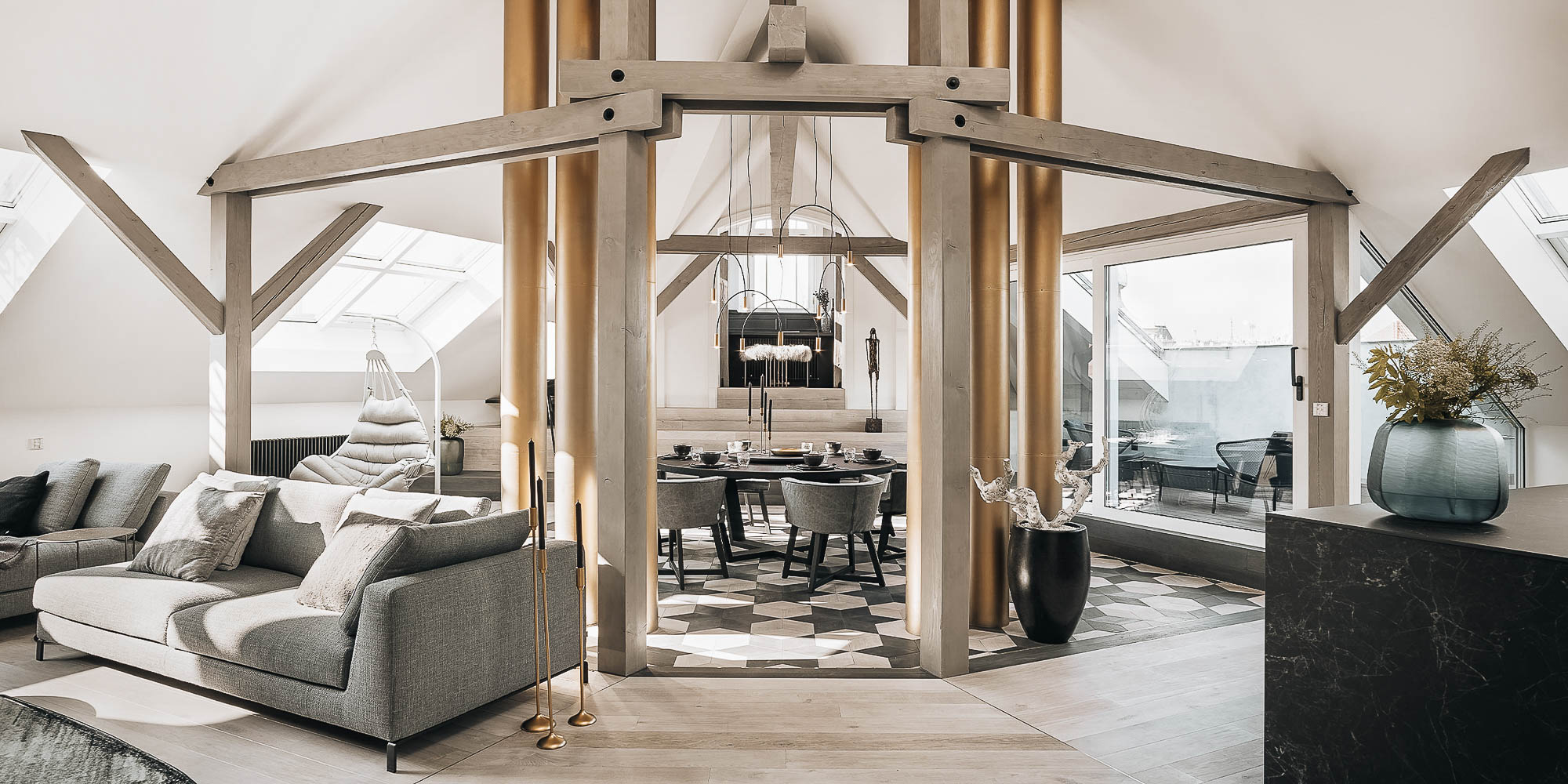
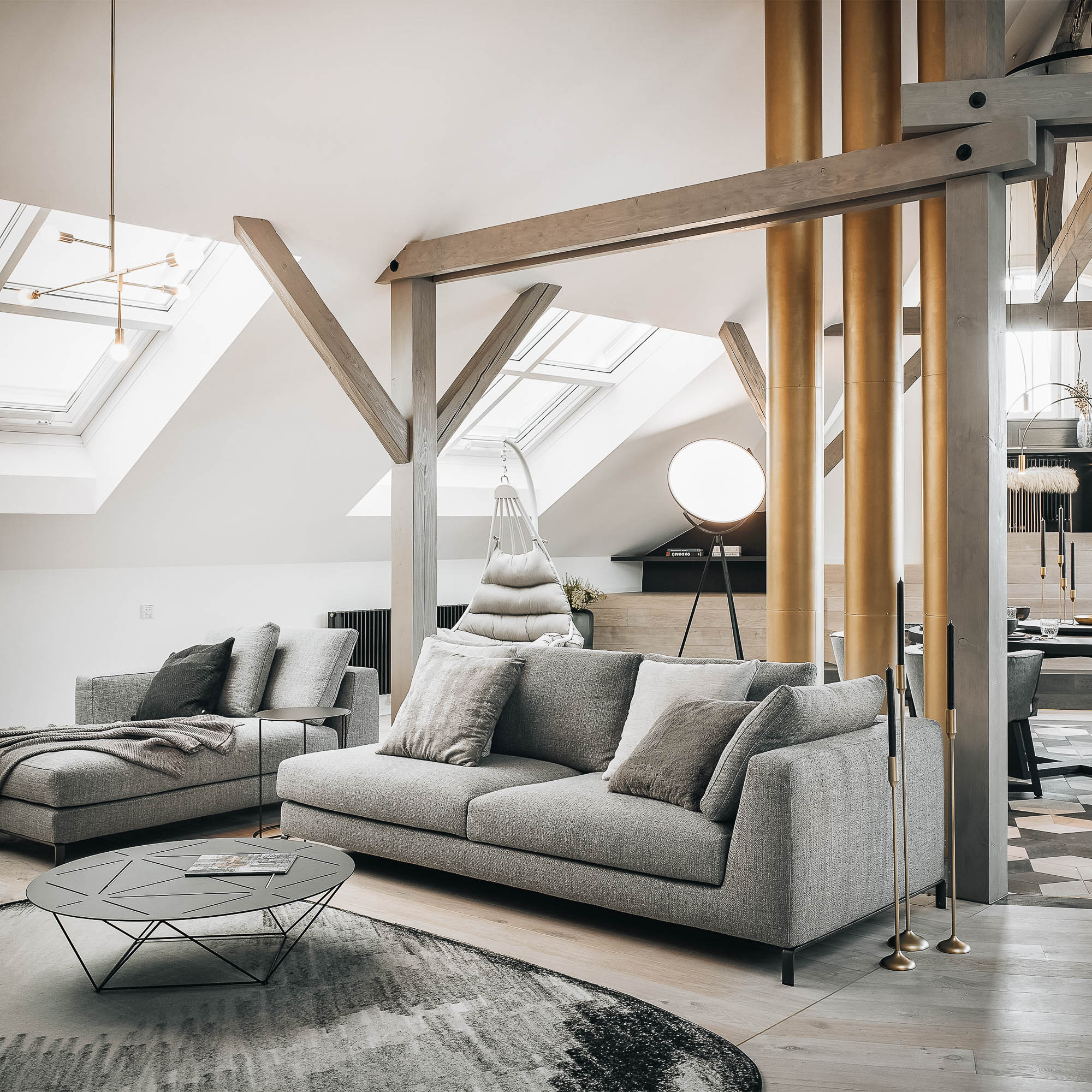
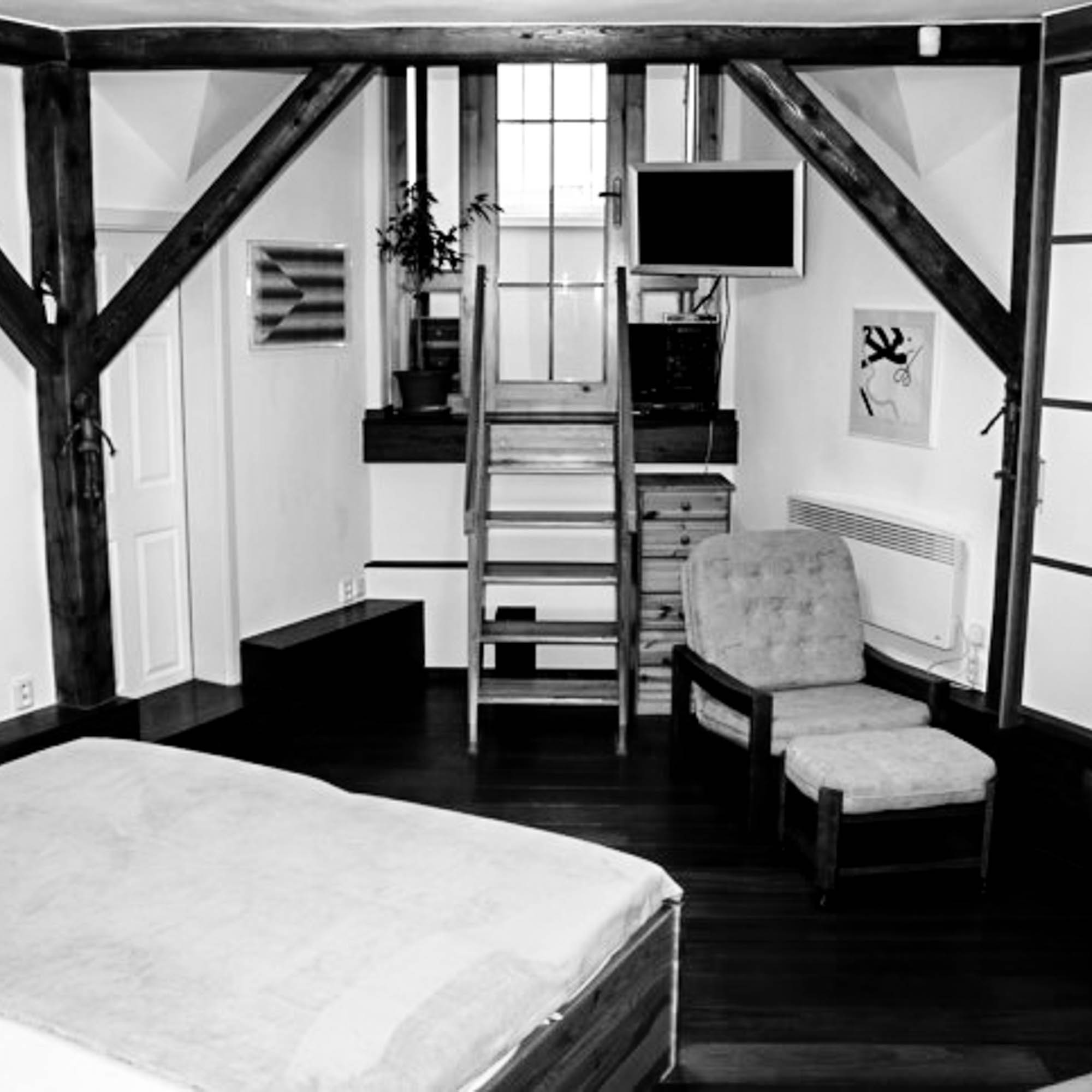
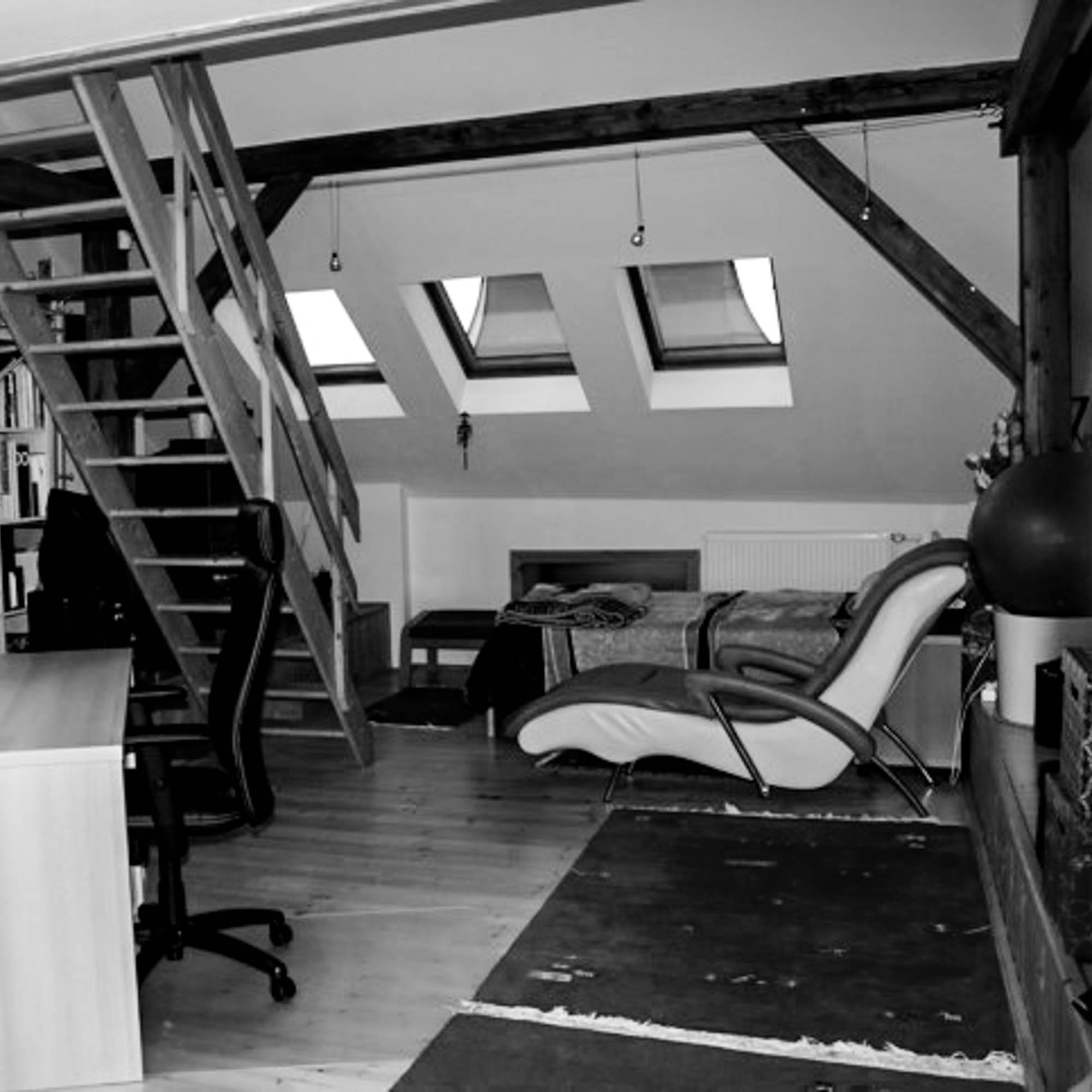
The renovation of an attic apartment in a historic building in Josefov, Prague, demonstrates just how much potential can be found even in a challenging space. After removing the interior walls, an open interior was created under the roof trusses, where the original chimneys and newly defined functional zones take center stage. An example of what a renovation of an apartment with an architect in the center of Prague can look like.
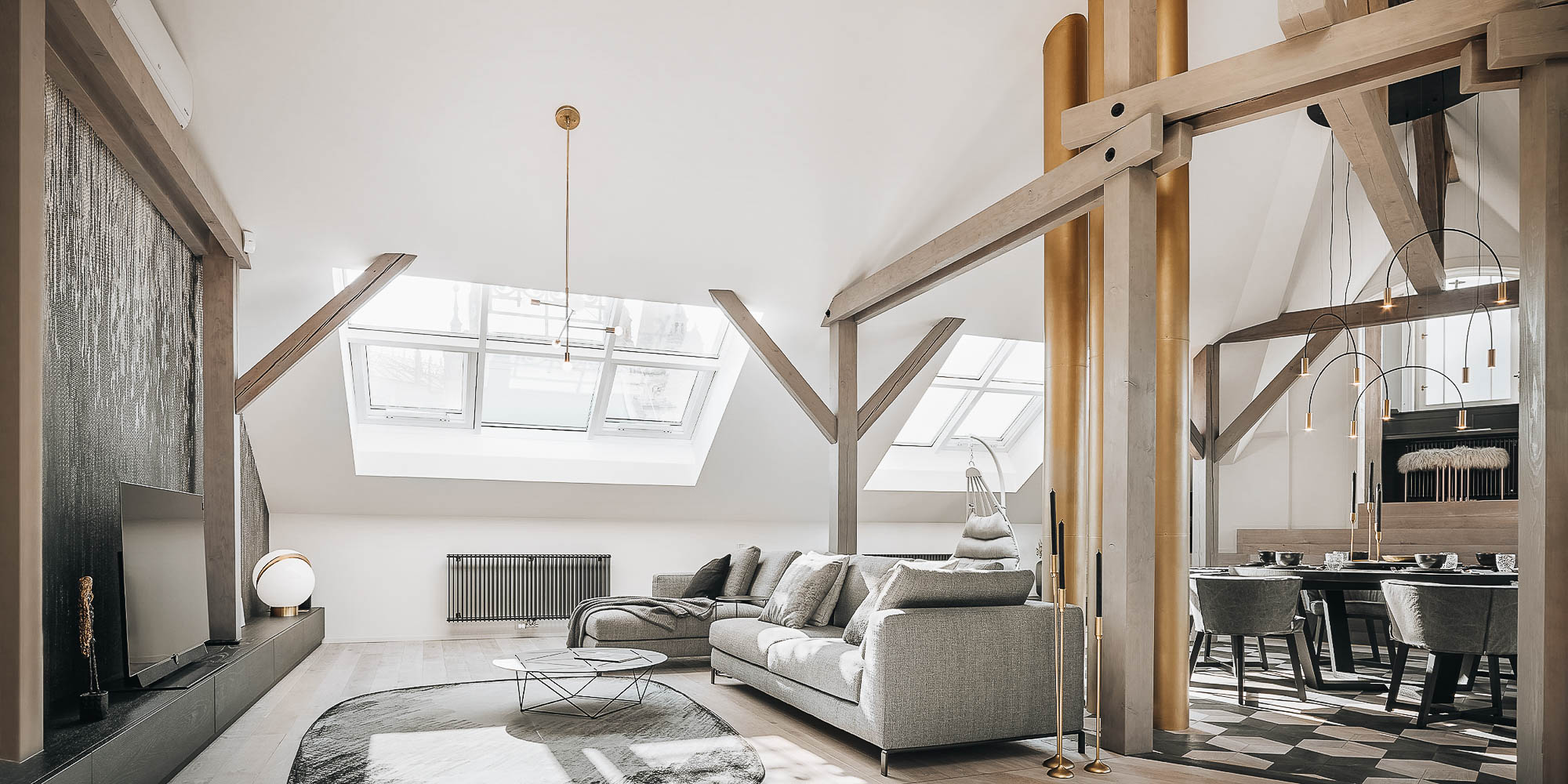
Living area integrated into the roof truss
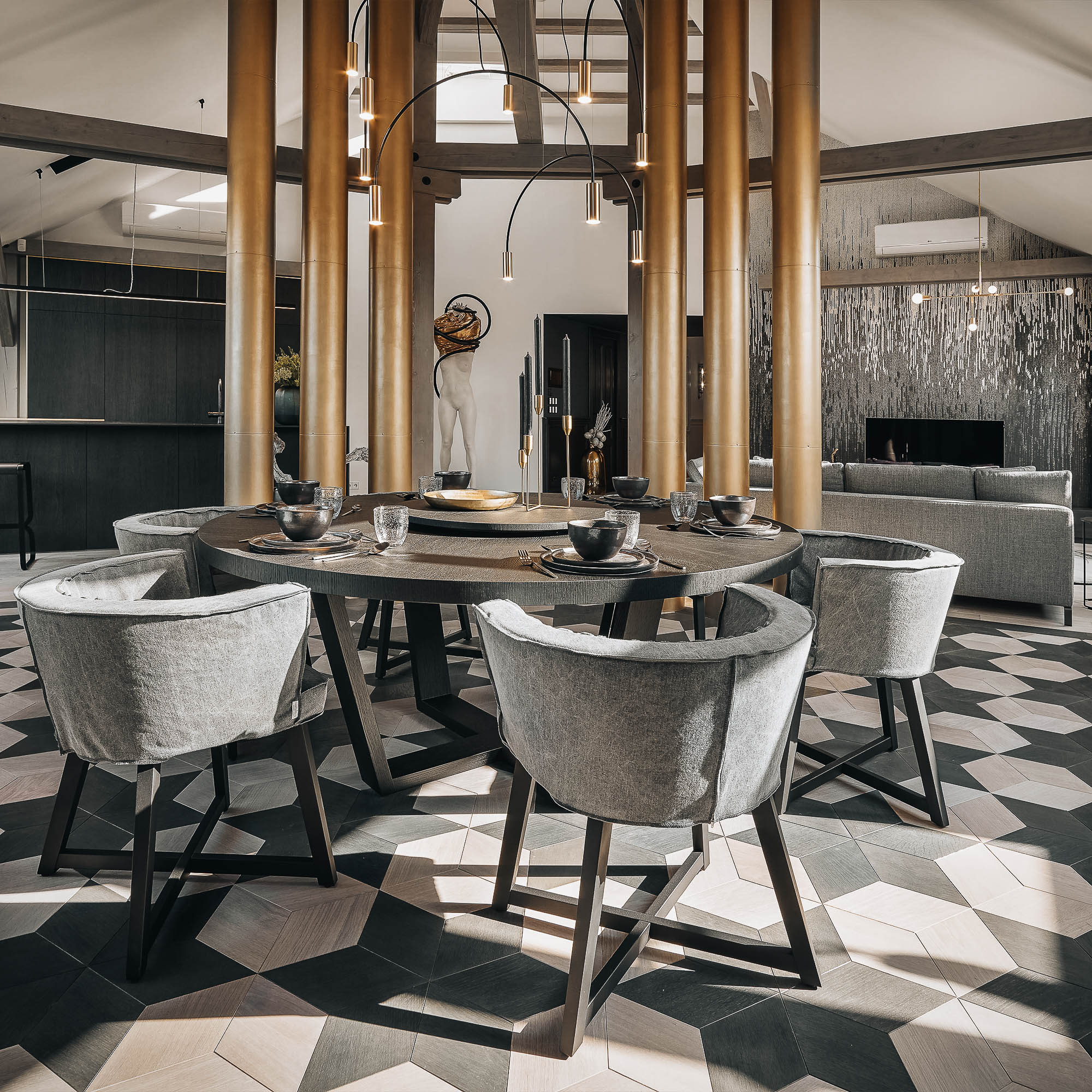
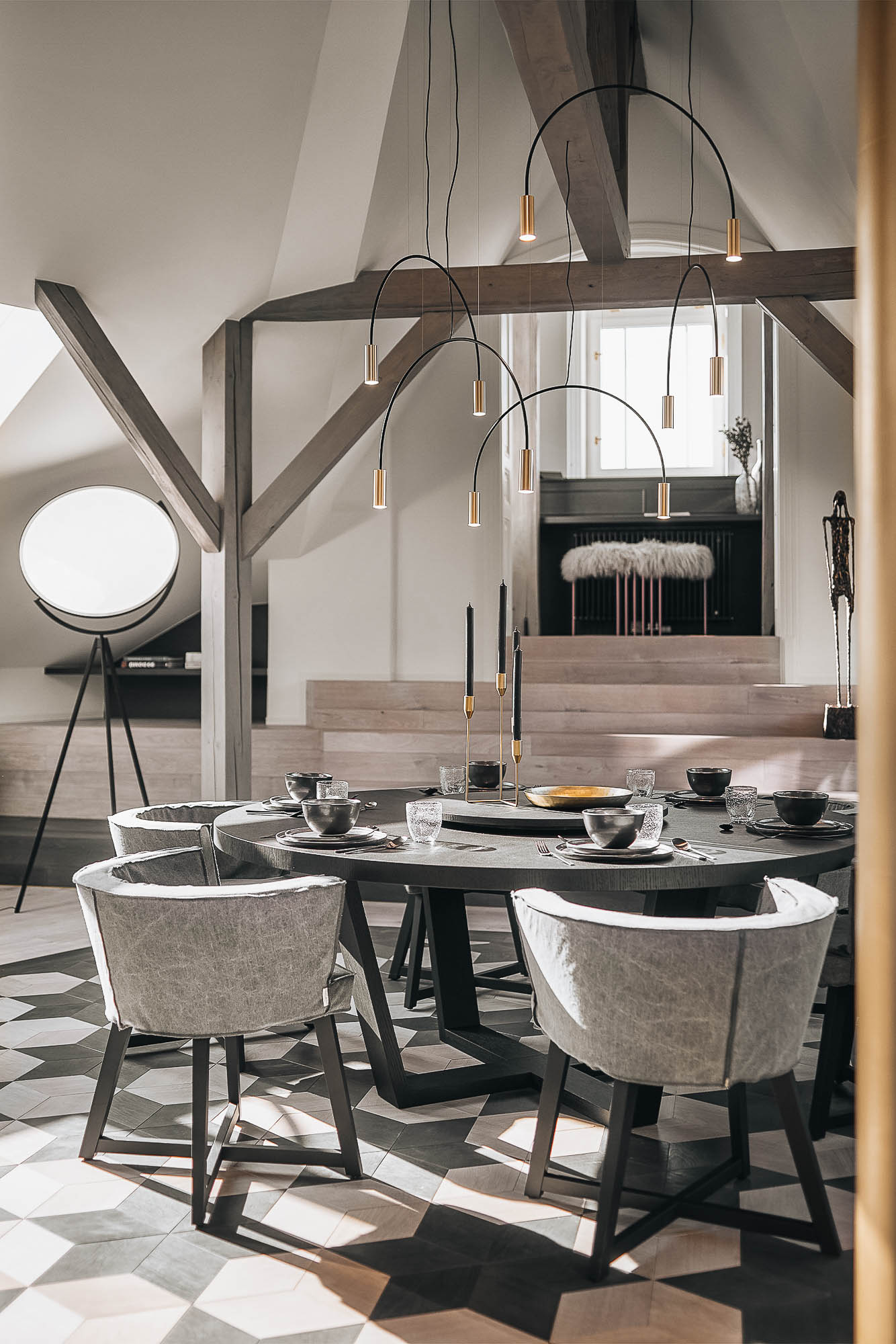
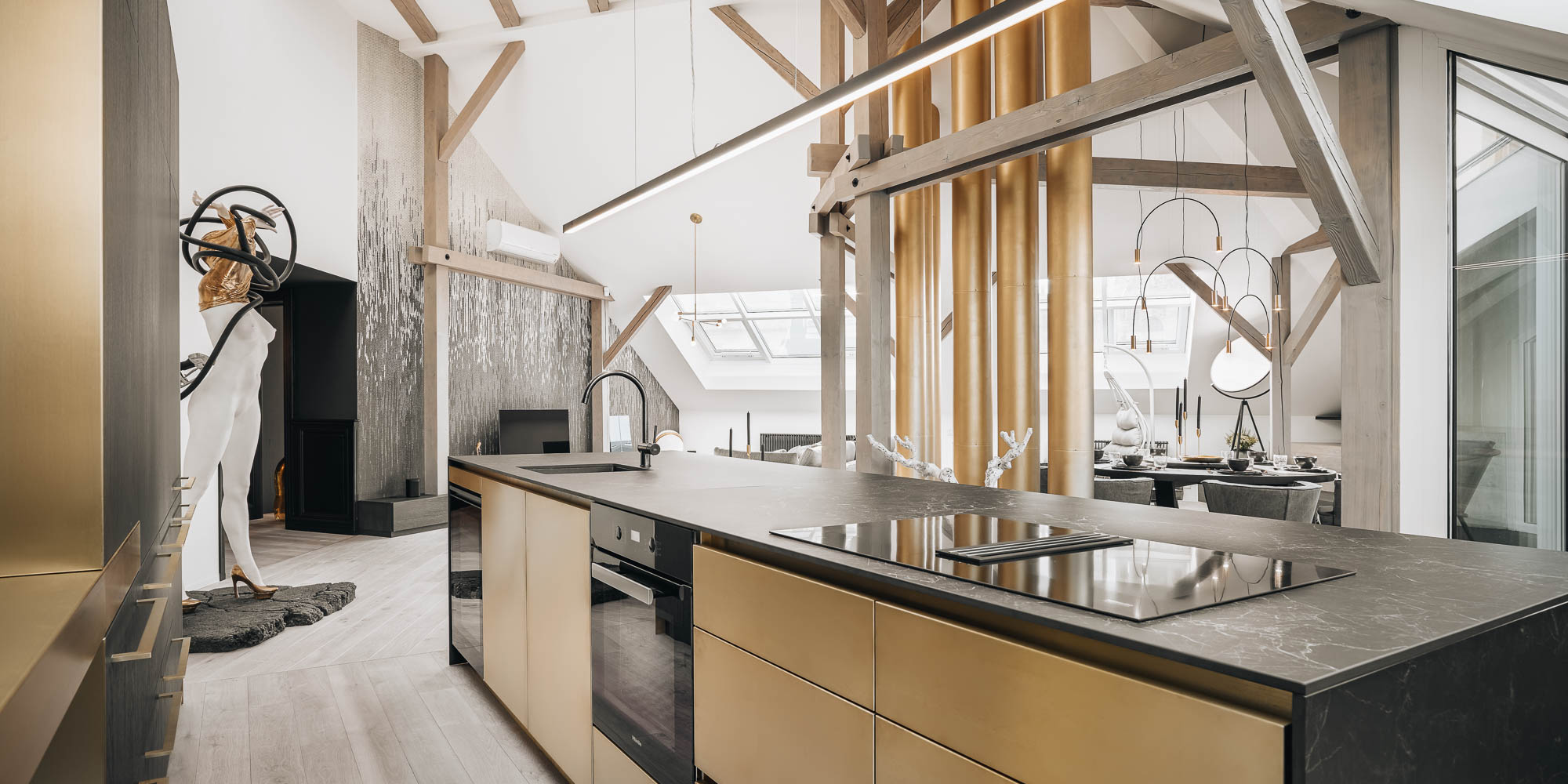
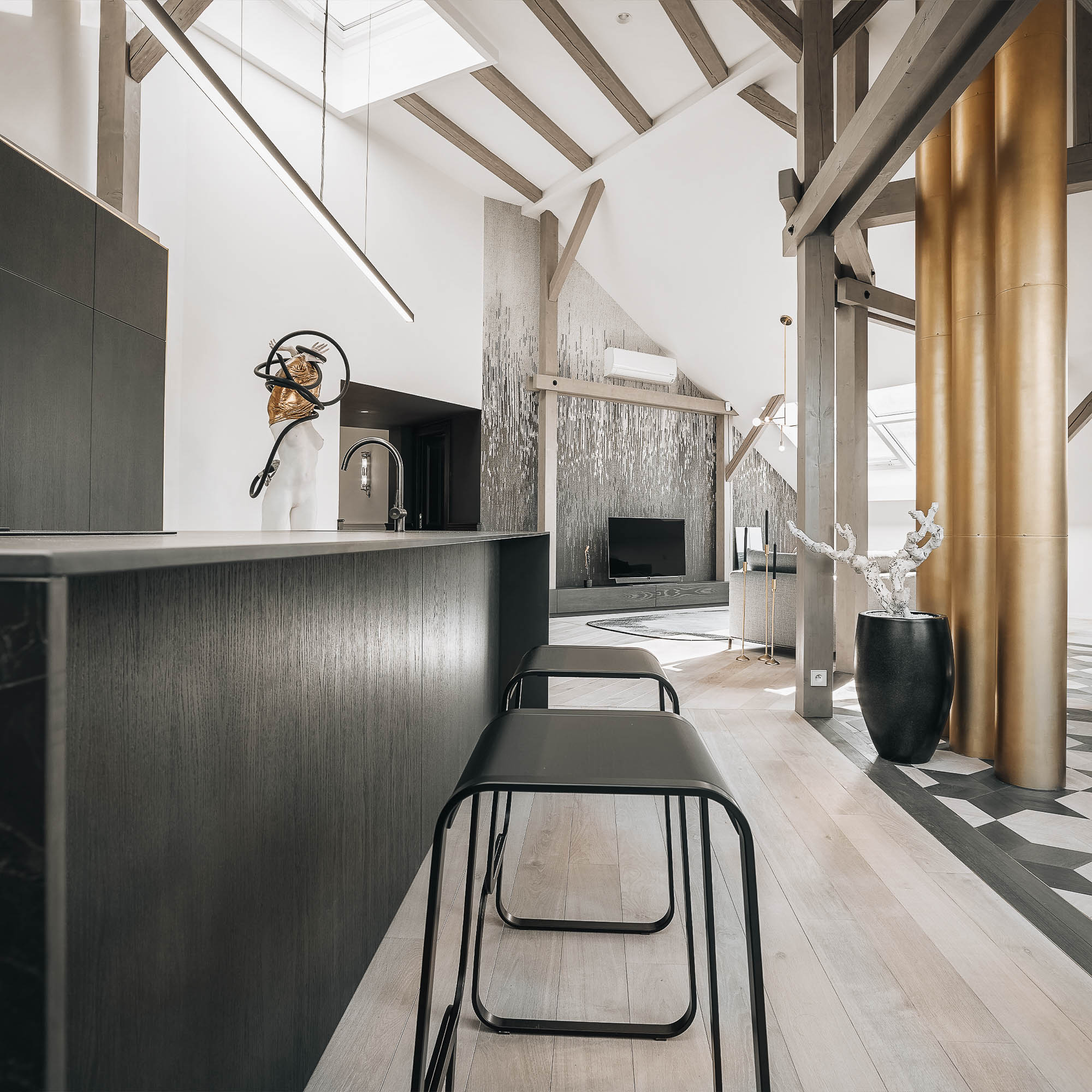
We integrated the individual functions—the living room, dining room, and kitchen—into the complex roof structure. Each part has its own place, yet the whole remains open.
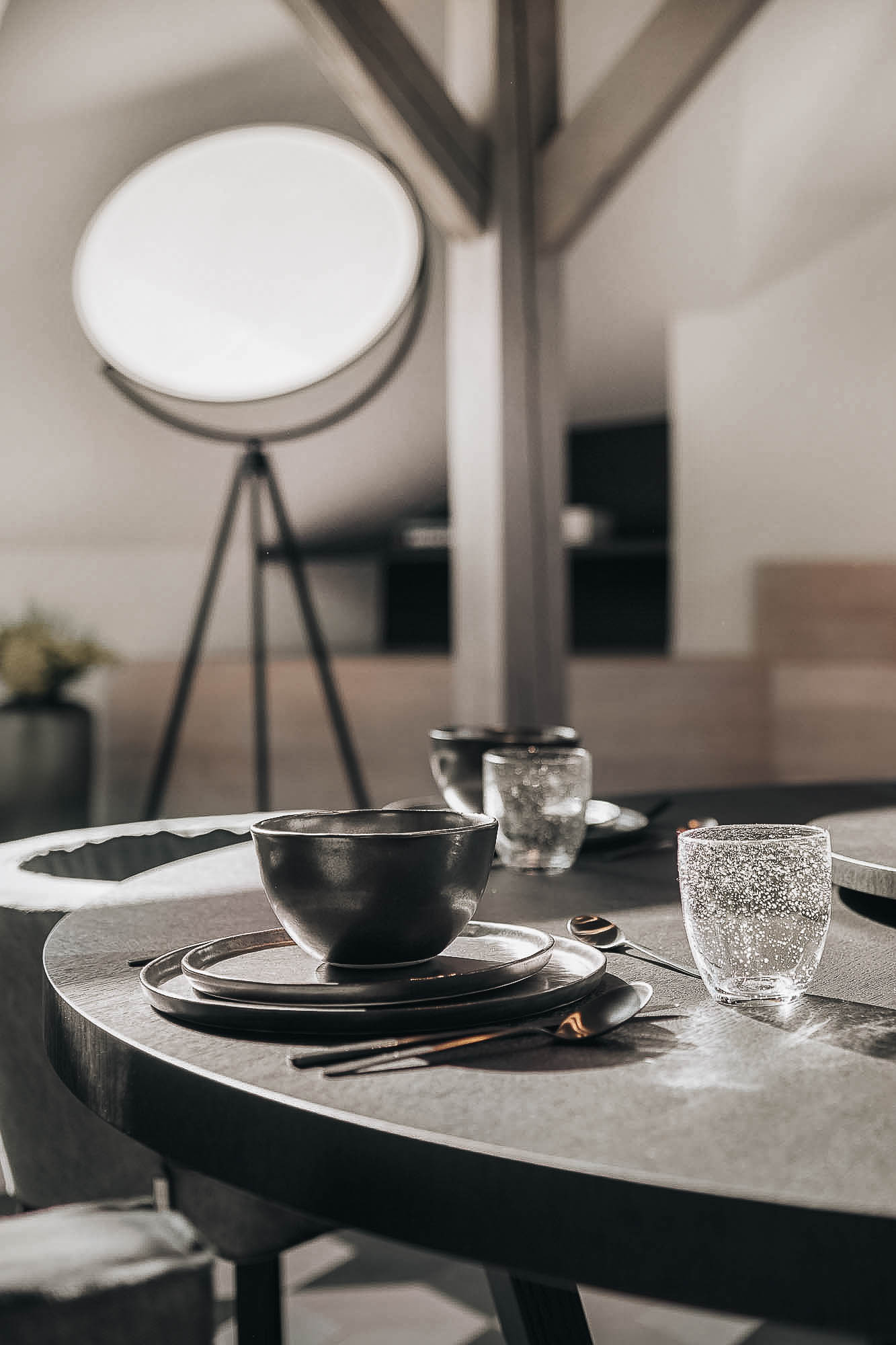
A unique feature is the dining room in a pentagonal space, where a conventional floor layout didn’t make sense. We therefore chose a wooden mosaic in three shades, which references the original flooring of historic houses. We placed a round dining table in the center, which naturally softens the geometry of the space.
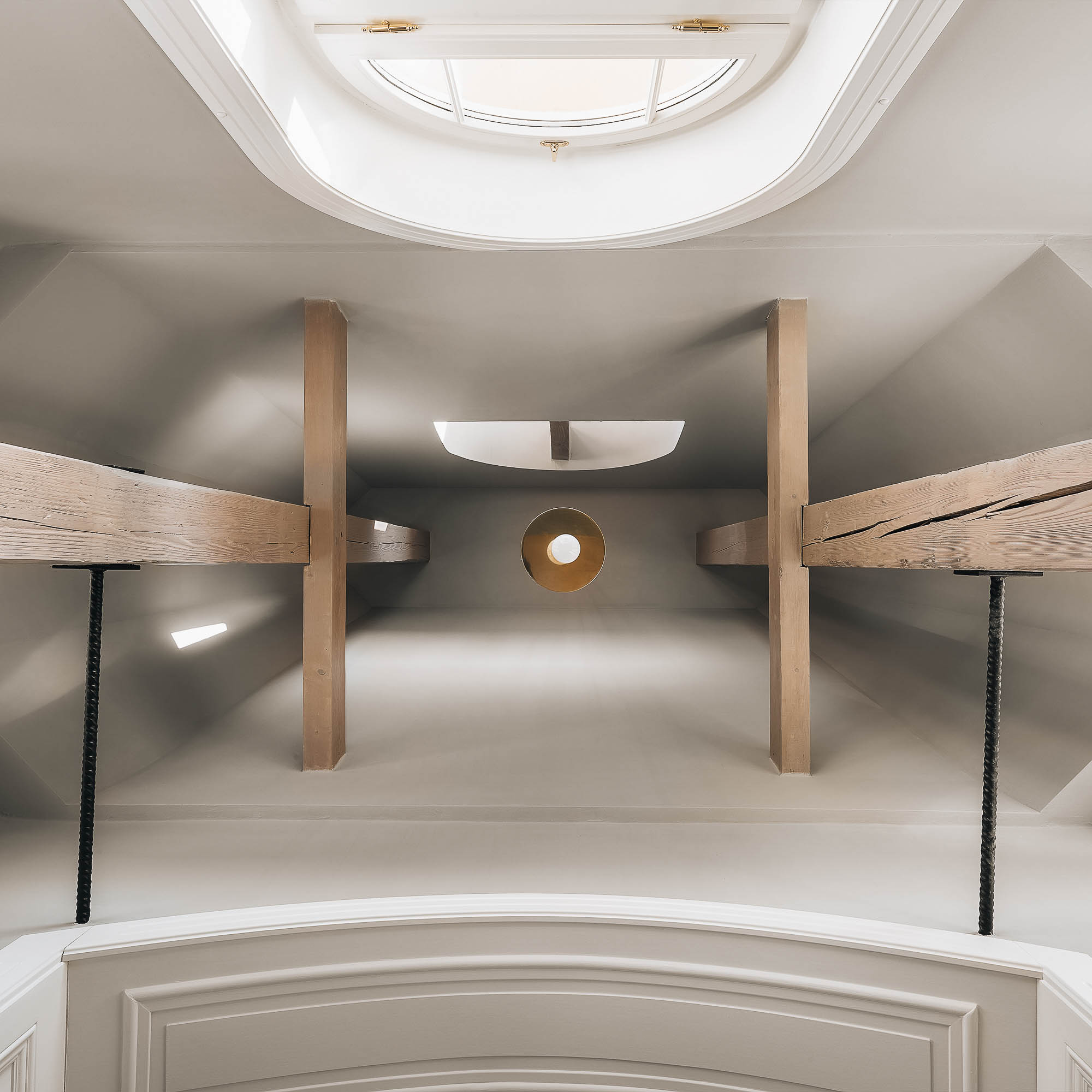
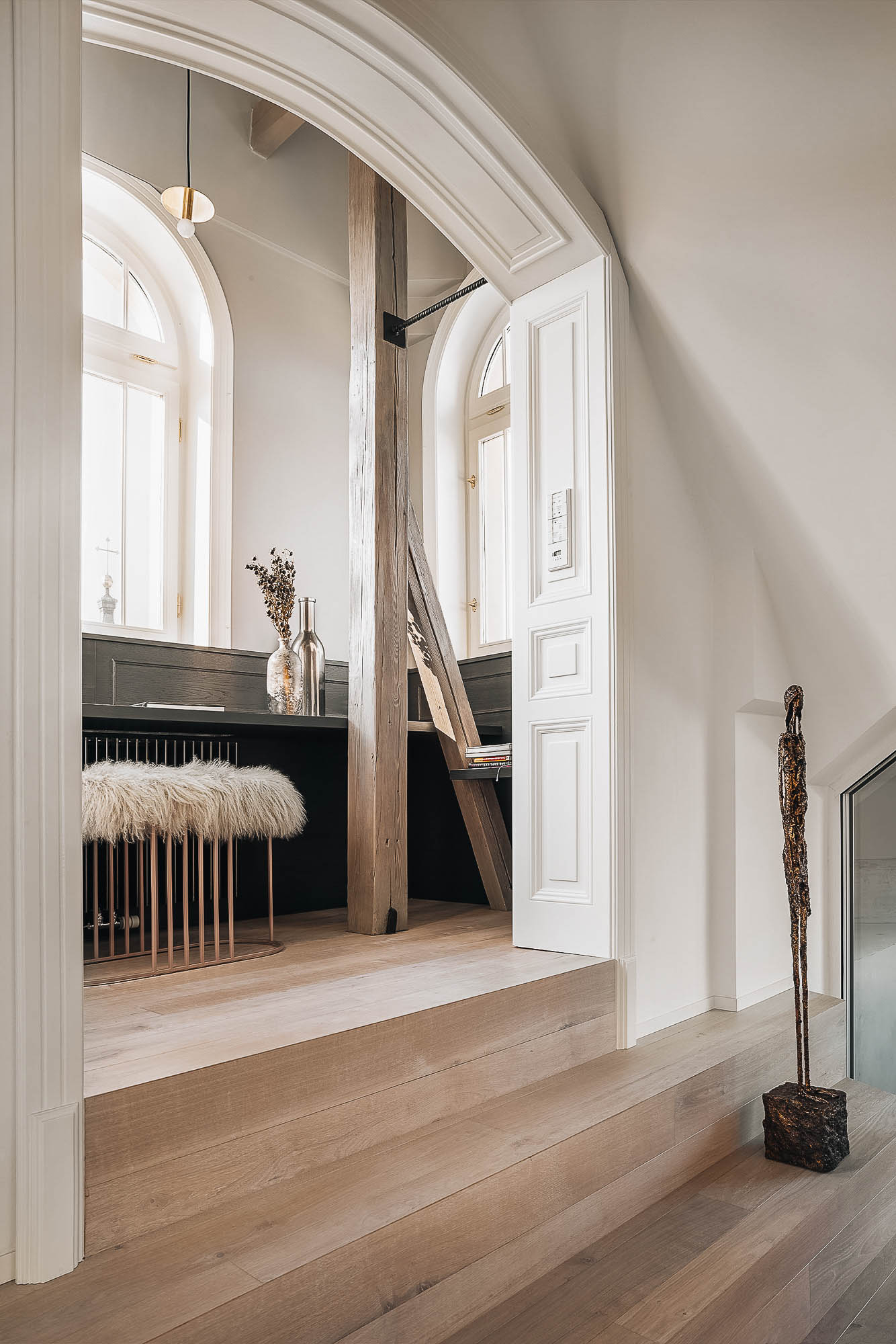
The living area also includes an entrance to a small turret with a view of Prague—a detail that makes the apartment a place, not just a layout.
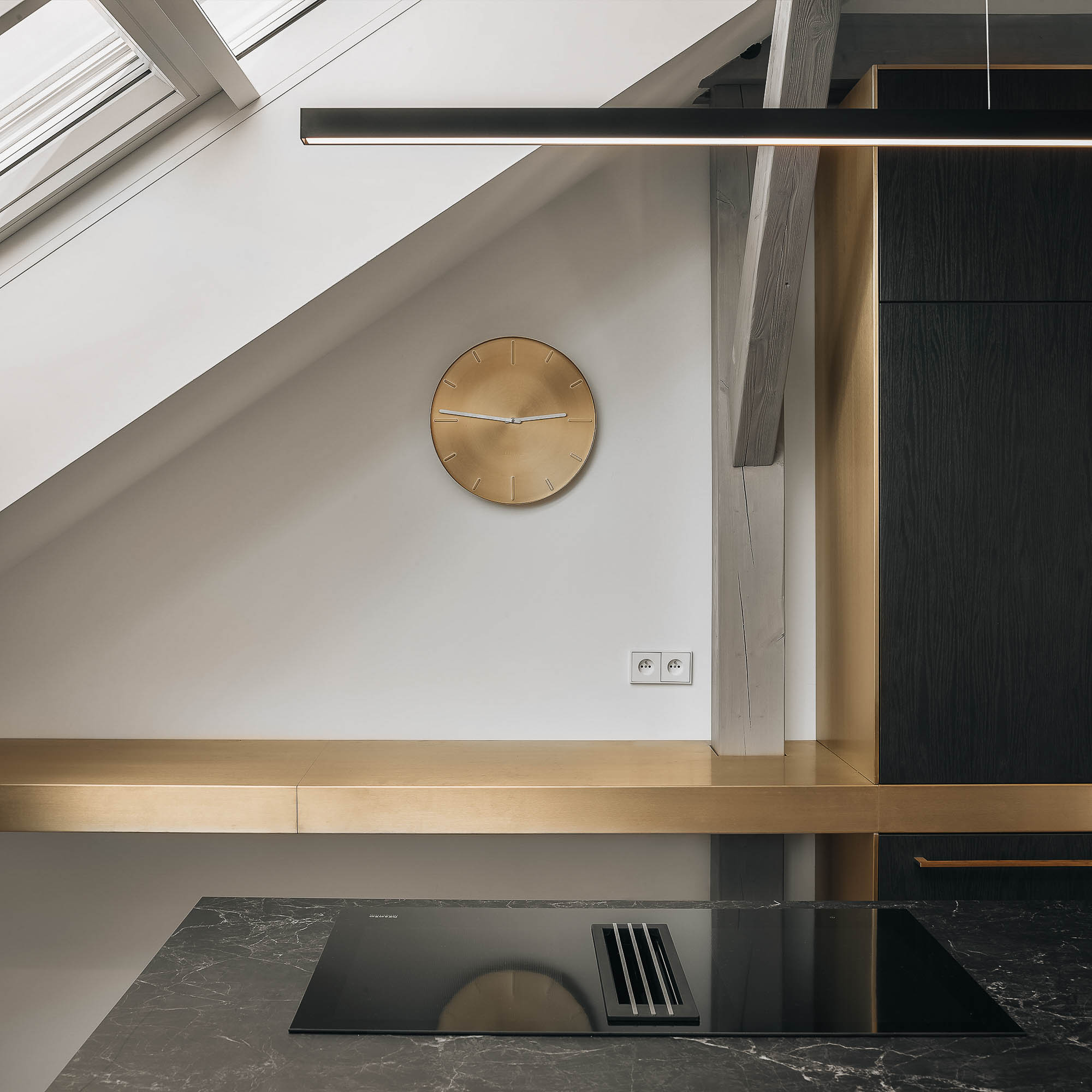
A freestanding kitchen, not a built-in unit
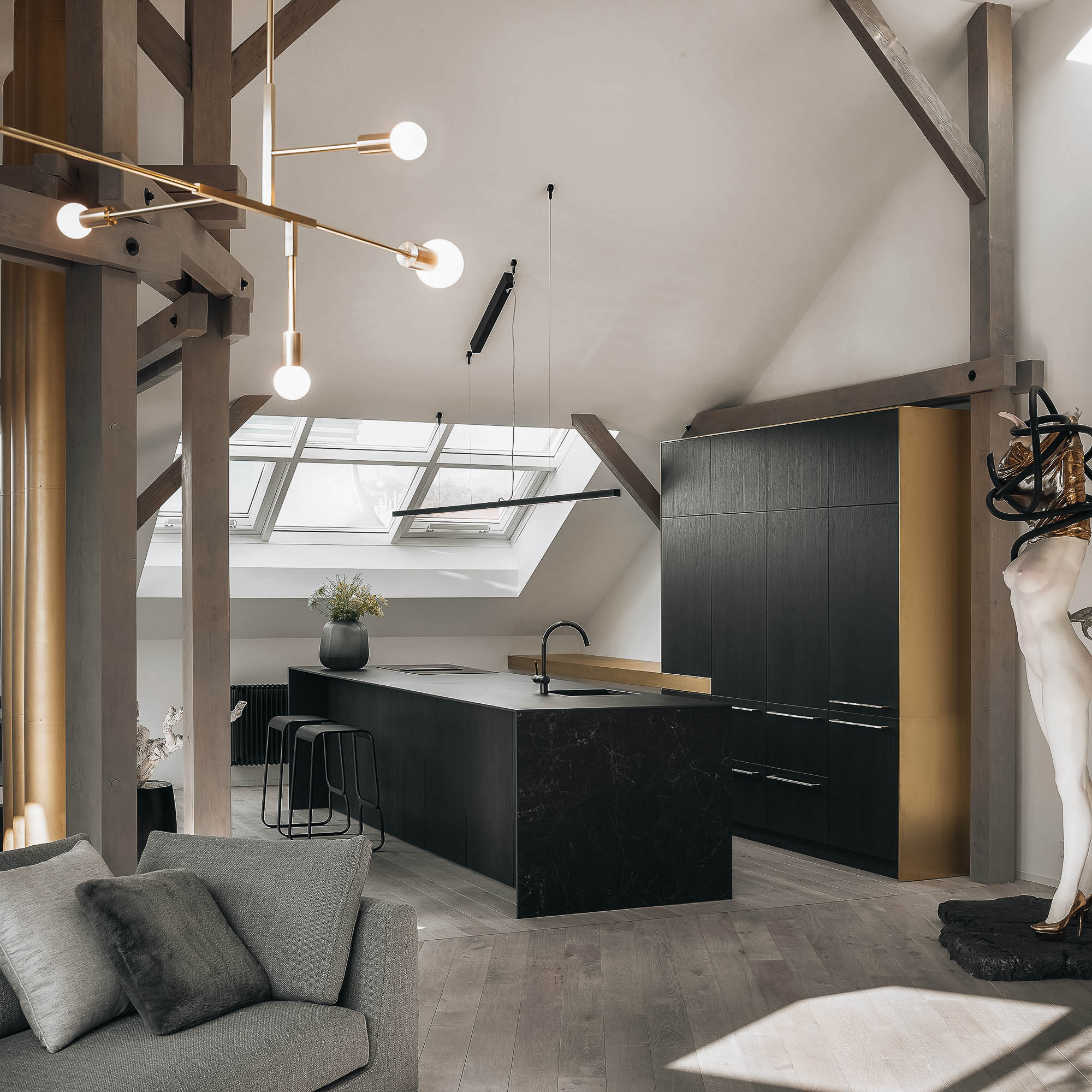
We did not design the kitchen as a classic built-in unit. Instead, it functions as a pair of freestanding elements—a tall cabinet section and a separate island.
We used a brass-toned metal-laminate veneer, which is repeated throughout the interior and complements the space’s muted color palette. As a result, the kitchen does not feel like a utilitarian utility area but rather a full-fledged part of the living space.
This is also a common principle in apartment interiors designed by architects—individual functions are not hidden but form the space.
Bedroom, Walk-in Closet, and Open Bathroom
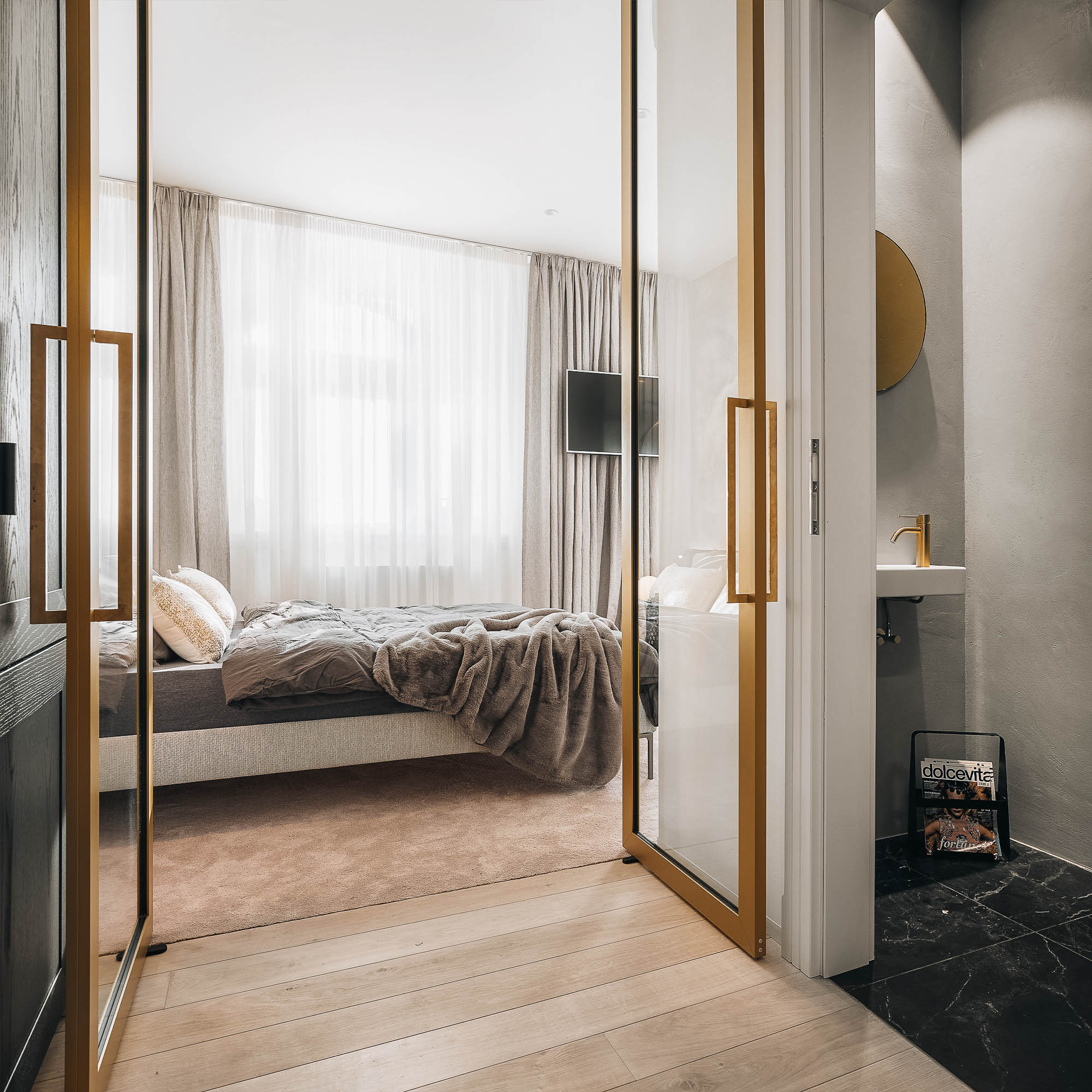
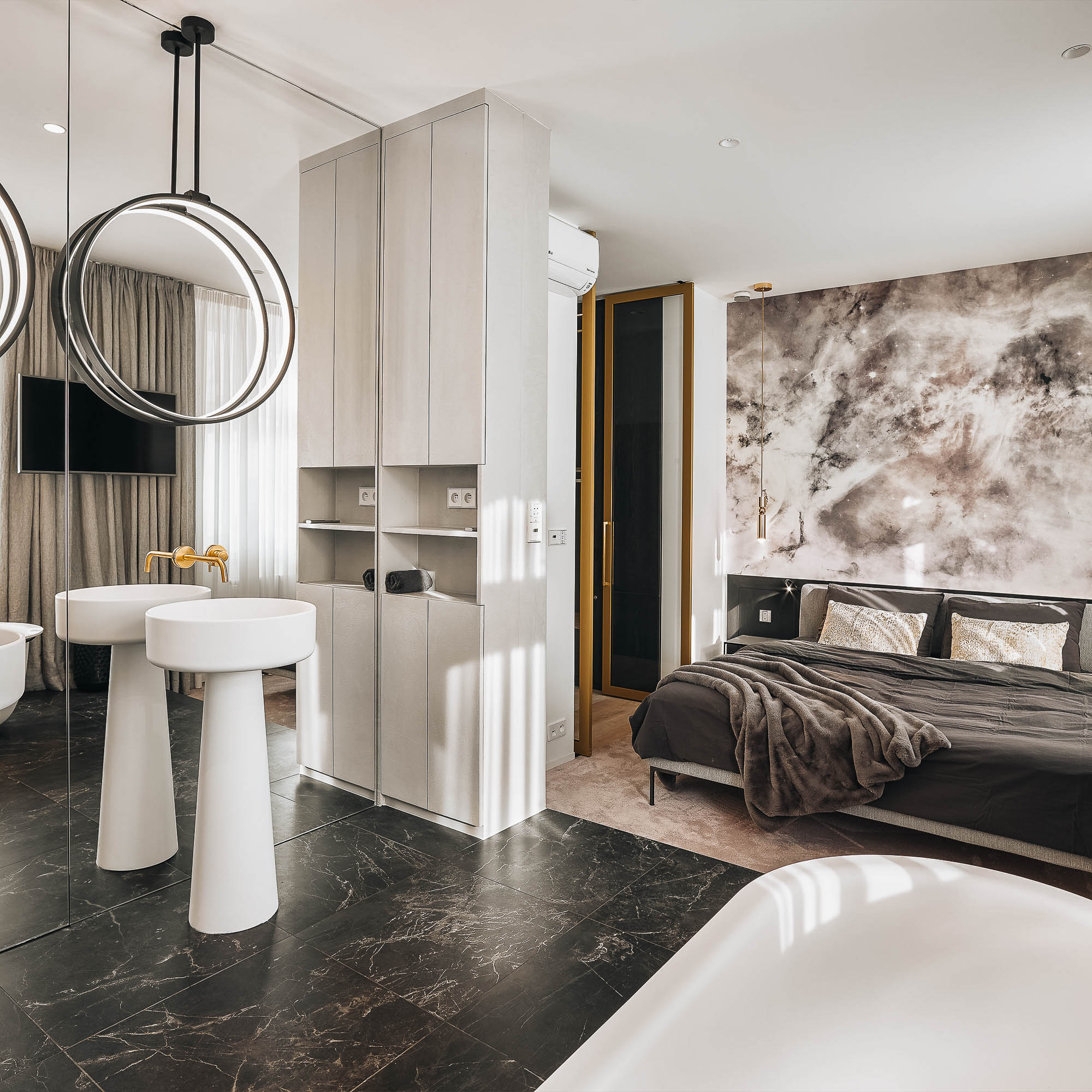
The master bedroom is accessed through a walk-in closet, which serves as a privacy buffer. The bedroom itself is connected to an open bathroom, situated on a raised platform to accommodate the plumbing and electrical systems.
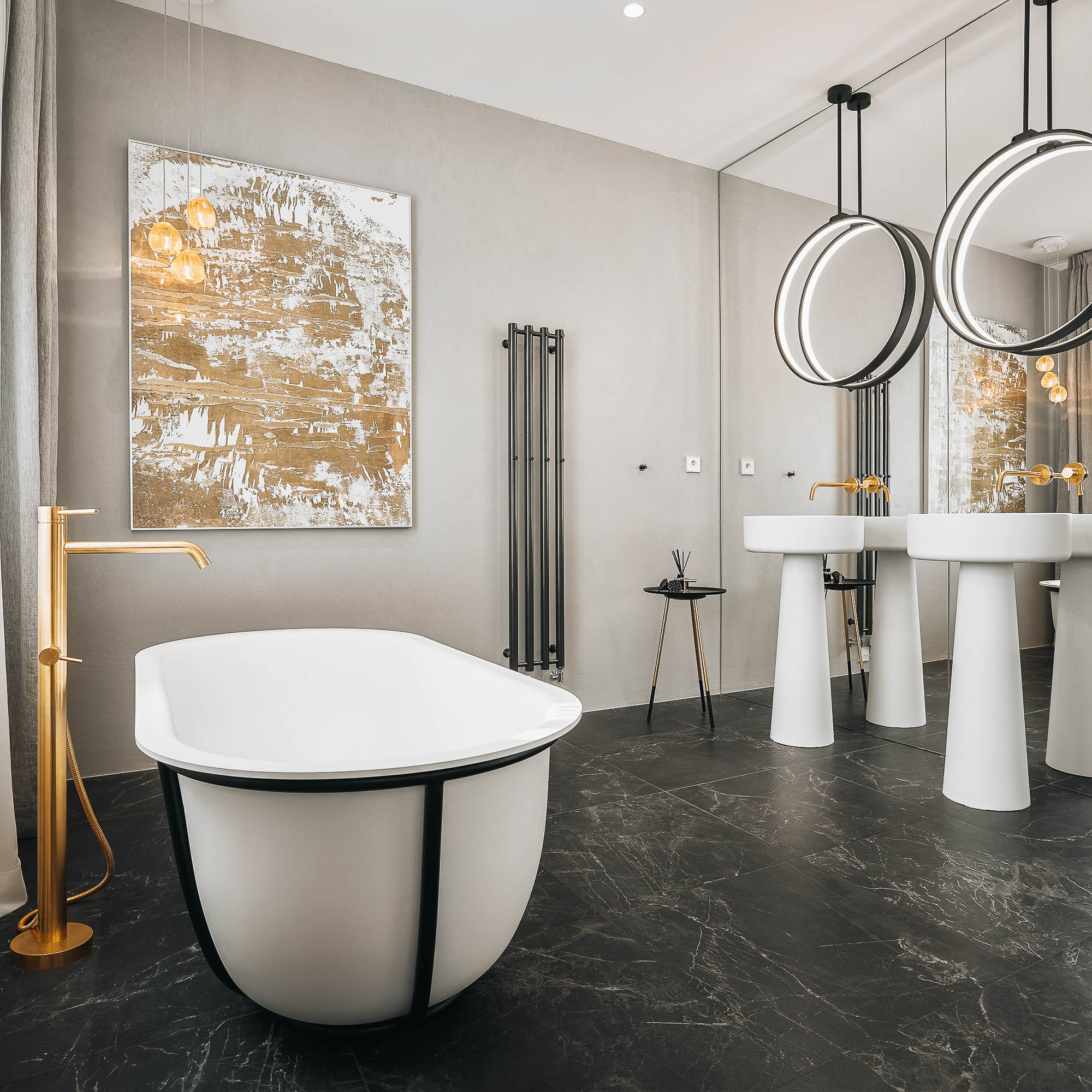
Two freestanding sinks stand in front of the mirrored wall. Suspended circular light fixtures create the illusion of a classic mirror—in reality, it is a view through the light onto the mirrored surface behind it.
The toilet is separate and accessible from the walk-in closet.
Attention to detail
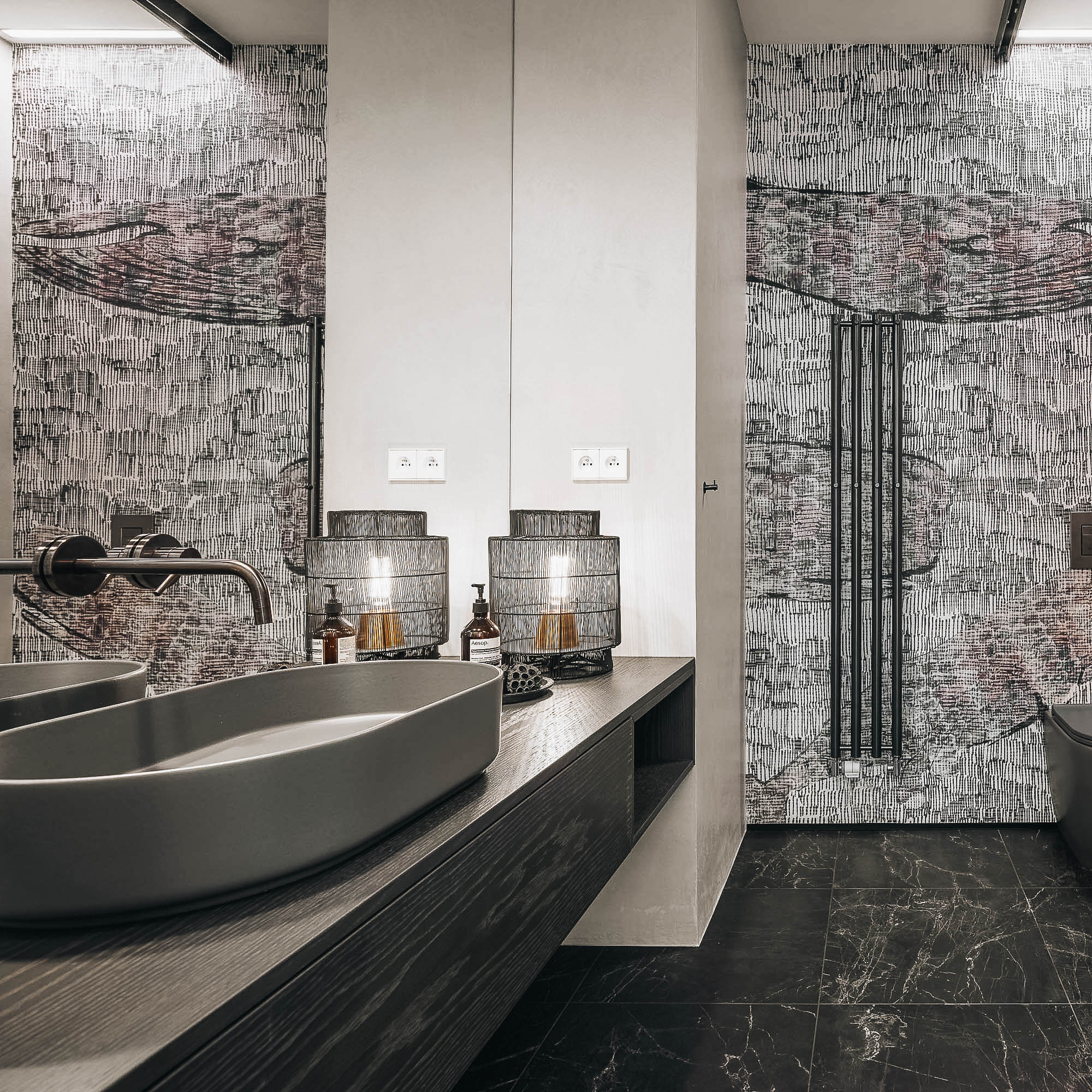
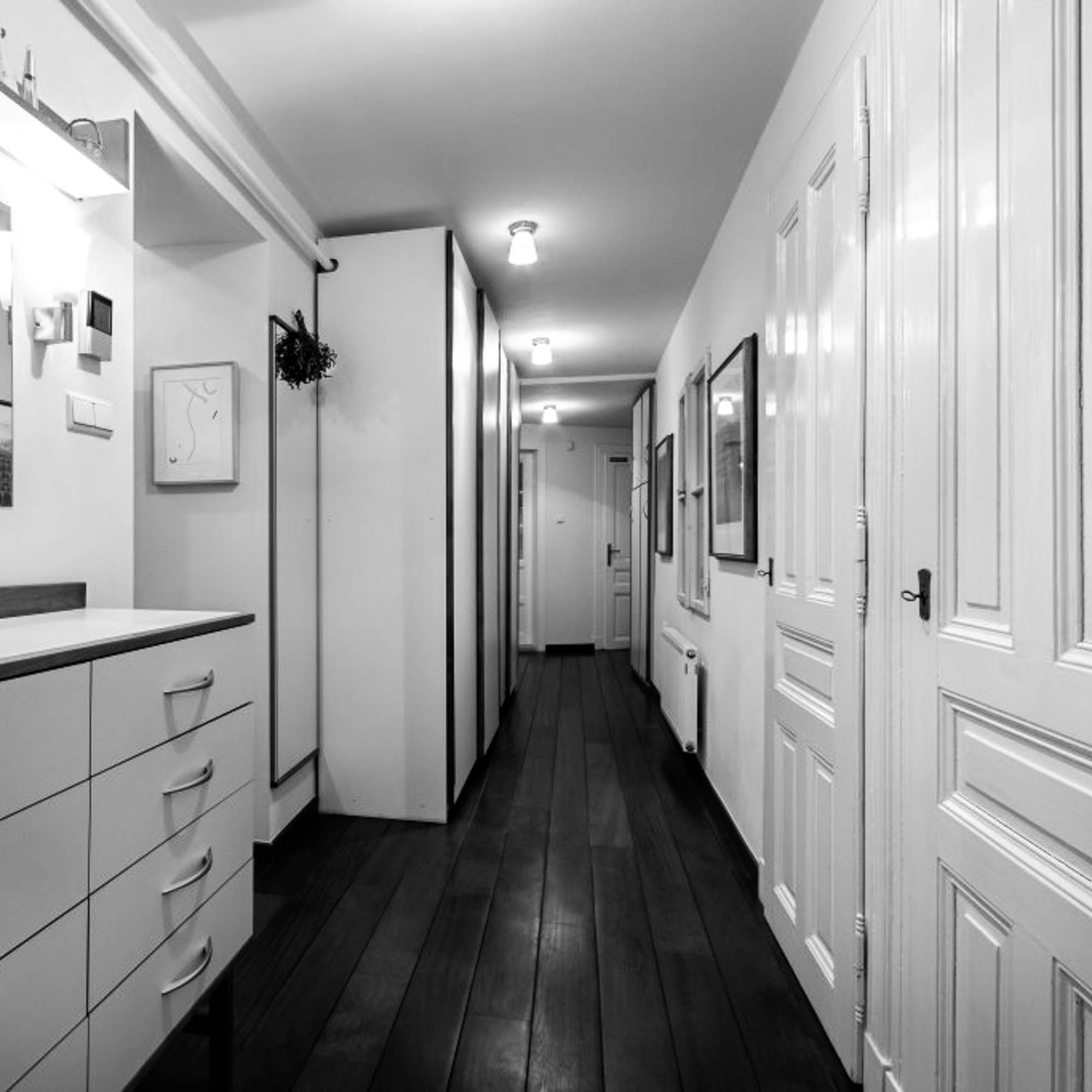
The second bathroom showcases a different approach—instead of traditional tiles, we used waterproof wallpaper that works even in the shower. We added coffered ceilings to the hallway, bringing a layer of texture to the space that was missing in the original apartment. We also use this principle in other projects apartment renovations, where we work with the contrast between old and new.
Attic Apartment Renovation: From a Labyrinth to an Open Space
The original attic apartment was divided into numerous small rooms with mezzanine levels. The space felt like a labyrinth, and its potential was practically stifled. The renovation of this apartment in a historic building in Prague was therefore not about design, but about restoring the logic of the space. It is precisely in situations like this that renovating an apartment with an architect makes the most sense—we look for potential where it isn’t immediately apparent.
Why We Love Renovations
Curious about how we approach interior design projects like these? Read more about it here in the section RENOVATIONS—it’s our favorite area of expertise.
— Pojďme se potkat!
Do you have a similar project you’d like to discuss with us? Leave your contact information and we’ll get back to you soon!
od Radky - 18. 4. 2026