
Villa SMRKOVÁ
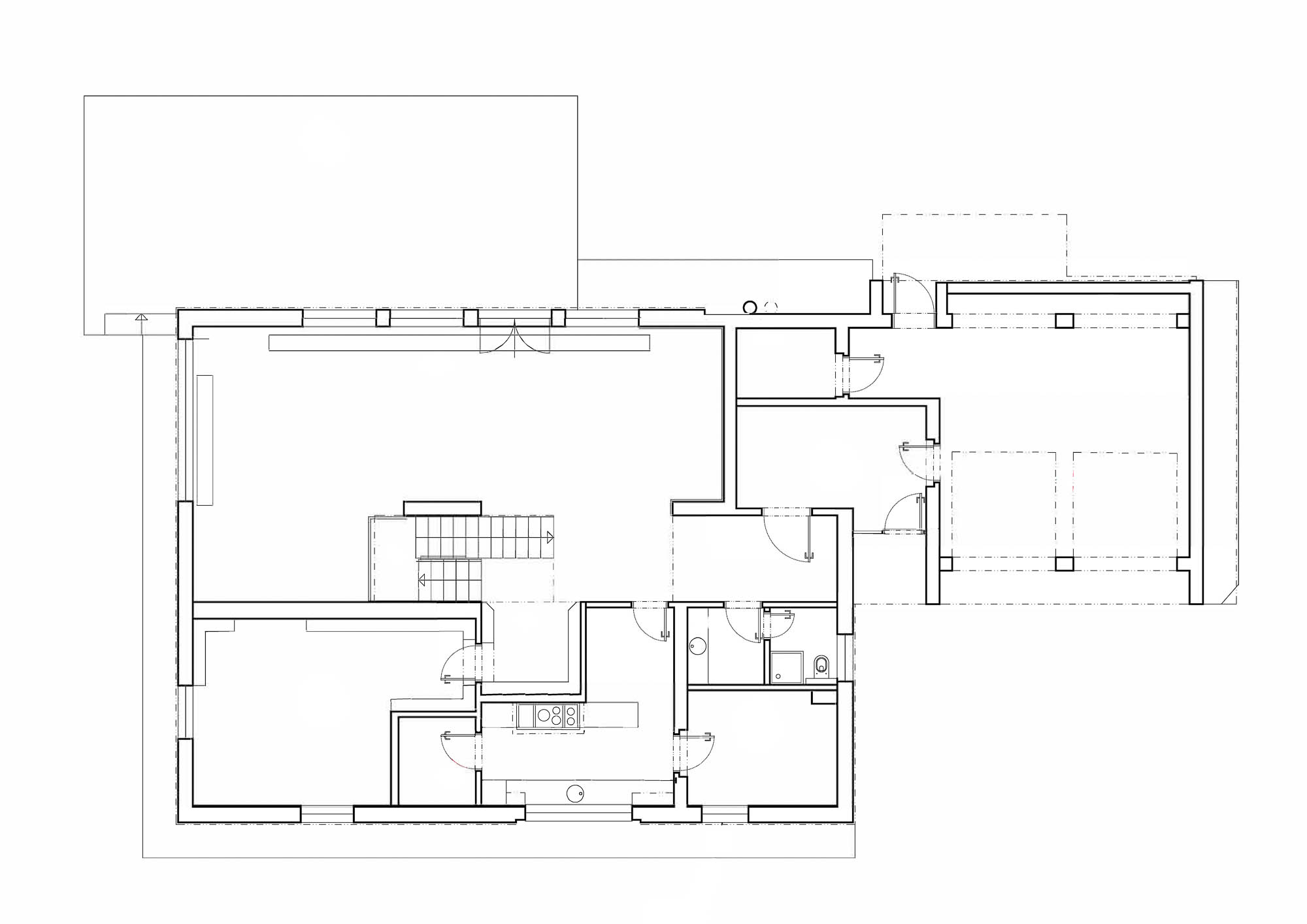
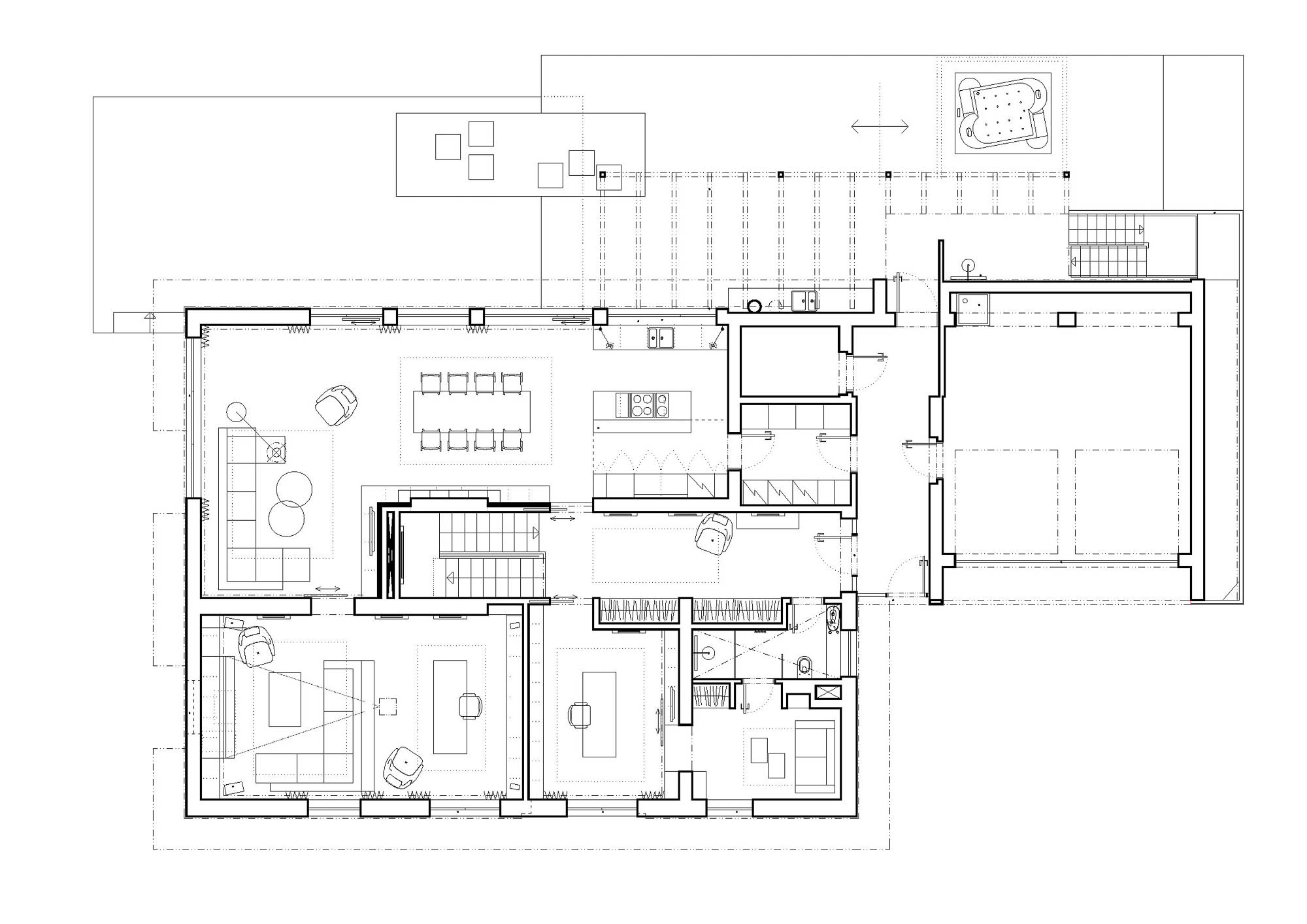
This home renovation project involved a complete interior redesign of the villa for a client with an extensive art collection. The goal was not to create a flashy backdrop, but rather a space that could showcase the collection. The foundation is understated: concrete finishes, a limited color palette, and minimal decor. This is complemented by oak and black steel in the details. The layout remains spacious—an open living area on the ground floor, along with work and guest spaces, and a private section on the upper floor divided into separate apartments.
Concrete Kitchen
This kitchen makes full use of concrete. The tall cabinets feature a gray finish that transitions in places into a more pronounced, decorative layer. The surface is not merely a backdrop, but an active part of the space. The kitchen unit conceals the entrance to the pantry—the doors blend into the surface and are only visible when needed. We designed the island as a contrast. Oak veneer, a thin stainless steel countertop, and integrated appliances without visual clutter. The handle-less design and beveled edges of the cabinet fronts lighten the kitchen’s volume.


A living area without a traditional floor
The living room and dining area flow seamlessly into the kitchen. Instead of the expected wooden floor, a concrete screed continues throughout, unifying the entire space and giving it a different feel. The dining area relies on contrast—a massive Cattelan Scorpio table, a striking base, a Persian rug, and lightweight Wishbone chairs. Above them, a light fixture clearly defines the seating area. The living area works with layers. Low furniture, oak wall paneling, large-format windows with curtains featuring a color gradient. Sliding doors allow the space to be closed off or opened as needed.


Lobby and staircase
The entrance lobby is designed as an open space for art and standalone pieces. Large-format paintings and objects have ample room and are not overshadowed by the interior. We designed the staircase with a steel railing structure and a latticework of leather cords. This technical element thus becomes one of the main motifs of the interior. Backlit steps clad in oak transform the atmosphere of the space in the evening. Full-height pivot doors close off the entrance as a distinct feature of the layout.


Bedroom and walk-in closet
The private area of the house features a more subdued palette of materials. Concrete gives way to wood. Three-layer oak flooring, built-in cabinets made of lacquered MDF, and leather handles create a cohesive whole. The wall behind the bed is covered with Wall and Deco wallpaper, which adds a subtle motif to the space. The walk-in closet is designed as a separate space. Stained veneer furniture complements a backlit island that combines storage with everyday comfort.

Bathroom under the skylight
The bathroom follows the material logic of the house. Concrete screed, patterned ceramic tiles, and a minimum of distracting elements. We placed the bathtub under the skylight so it could make the most of natural light during the day. In the evening, the space is complemented by backlighting that changes the atmosphere without the need for additional elements. A steel structure with a stone sink, black faucets, and integrated storage keep the space clean and functional.


Study
A study is more than just a workspace. It is a separate zone with its own atmosphere. The gray MDF combined with oak veneer complements the rest of the interior. We have equipped it with a projector, a sound system, and custom-made furniture based on the design of the bookshelves and storage units.
The 90s, unapologetic
The house’s original interior was exactly the kind of 90s design that makes no attempt to be understated. Glossy tile floors, heavy dark wall tiles, coffered ceilings, crystal chandeliers, a kitchen with mosaic tiles, and a staircase that drew more attention than the space itself. And that is precisely why this home renovation made sense. It wasn’t a cosmetic fix, but a complete shift in thinking. The house had good proportions, spacious rooms, and potential hidden beneath layers of period-specific choices. Our task was to calm everything down, clean it up, and rebuild the interior so that it would work for contemporary living—without turning it into a sterile catalog.


Why do we love renovations?
Projects like SMRKOVÁ show that a good house is often already there. You just need to rediscover it. And that is exactly why we do home renovations with an architect — not as an upgrade, but as a fresh start. On this page, you’ll find more about our approach to renovations and other similar projects.
— Let"s meet!
Do you have a similar project you’d like to discuss with us? Fill out a short questionnaire and we’ll get back to you!
Petr - 29. 4. 2026